



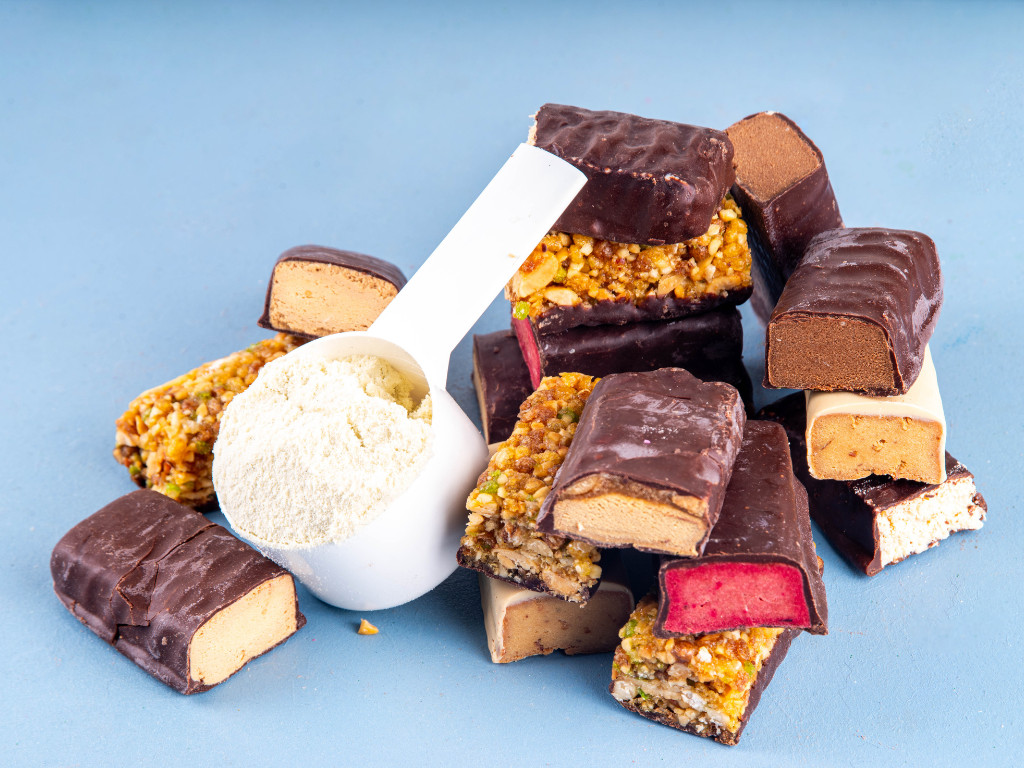
If you were anywhere near the Sweet & Snacks Expo this year, you felt it. Protein was everywhere. Protein gummies, protein chews, high-protein candy bars, collagen bites — the confectionery world is firmly in the business of making indulgence feel functional. And honestly? It makes total sense. Consumers want the treat experience without the guilt, and protein delivers that permission slip.
But here's the thing nobody is talking about loudly enough: formulating a product with protein and labeling it as a protein source are two very different challenges. And if you've ever sat across from a client or a Marketing manager who was convinced their collagen gummy was going to be the next great protein snack, you know exactly the conversation I'm about to have with you.
Let's get into it.
Why Protein in Confectionery Is Exploding
The data is clear — protein snacking is no longer a niche category. What started in sports nutrition has fully crossed over into mainstream confectionery. Consumers are reading labels, they're tracking macros, and they want their candy to do something for them. Brands are responding, and the Sweet & Snacks show floor reflected that in a big way this year.
The ingredient options are genuinely exciting. Whey isolates, pea protein, collagen peptides, rice protein, gelatin — there's no shortage of ways to get grams into a piece. But the moment you start talking about putting a protein claim on the label, or even just a % Daily Value next to the protein line on your Nutrition Facts Panel, you've entered regulatory territory that trips up a lot of smart people.
The Part No One Loves Talking About: PDCAAS
Here's the technical reality. The FDA doesn't just care about how many grams of protein are in your product — it cares about the quality of that protein. The method used to evaluate this is called the Protein Digestibility Corrected Amino Acid Score, or PDCAAS.
The PDCAAS calculation is outlined in 21 CFR § 101.9, and it's the method required for calculating the "corrected amount of protein" for adults and children 1 year and older. The score is based on the amino acid profile of your protein source, corrected for digestibility, with 1.00 being the highest possible score (think whey, casein, egg — complete proteins). If your calculated score comes out above 1.00, you set it at 1.00.
Now here's where it gets interesting for confectionery formulators. Many of the proteins we love to work with — gelatin and collagen chief among them — score very poorly on PDCAAS. Why? Because they are low in or missing essential amino acids like tryptophan. Gelatin actually scores at or near zero on the PDCAAS scale, which means that even if your gummy has 10 grams of gelatin per serving, the corrected protein for label purposes could come out to essentially nothing.
The Multi-Protein Formula Trap
"But wait," clients tell me, "I'm using three different proteins. Can't we average the amino acid scores across all of them?"
I really, really wanted this to work. But the answer is no — and the math matters here.
The correct method is to calculate each protein source individually, then add the corrected protein grams together. So if Protein A has a PDCAAS score of 0.5 and you're using it at 10% in a 50g product, your corrected protein contribution from that ingredient is: 0.5 × 0.1 × 50 = 2.5 grams. You run that same calculation for each protein in your formula and sum them up.
You cannot take a blended average of the amino acid profiles across your proteins and calculate one combined score — even if doing so would mathematically give you a better result. The rules are the rules, and there are only a handful of specific food combinations (think rice and beans, which together form a complete protein) where an exception exists.
Proteins That Actually Score Well — And What They Cost You in the Pan
So if gelatin and collagen are off the table for label claims, what proteins do score at or near 1.0 on the PDCAAS? Here are the main ones — along with the formulation tradeoffs each brings into a candy system.
Whey protein isolate scores at 1.0 and is consumer-recognized, but it browns easily in heat-processed systems, creates opacity, and at higher levels produces a rubbery, dense texture that is hard to work around in gummies or chews.
Soy protein isolate also hits 1.0 but brings a characteristic beany flavor note that is difficult to fully mask, turns your product opaque, and carries an allergen declaration requirement.
Pea protein has become popular in better-for-you confectionery with a competitive score, but it contributes an earthy bitterness, a yellow-green tint, and a grainy or dry mouthfeel at higher use levels. You can find some clear versions in the market.
Casein and milk proteins behave reasonably well texturally in some systems but add opacity, dairy flavor, and heat stability concerns depending on your process.
The common thread across all of them: the more protein you add, the harder your formula has to work. Candy systems are precision-engineered textures, and protein ingredients don't play by the same rules as sugar or starch. They affect water activity, respond unpredictably to heat, and bring flavor and color you didn't design for. There's no universal cutoff — it depends on your specific system — but most formulators hit the ceiling sooner than they expect.
The Bottom Line
Protein in confectionery is a real and growing trend, and there are absolutely ways to build products that deliver meaningful protein content and communicate it honestly to consumers. The key is understanding the regulatory framework before you formulate, not after. Know your protein sources, know their amino acid scores, and know what claims you can and cannot support.
If you want to go deep on the calculation methodology, the relevant regulations are 21 CFR § 101.9 for the PDCAAS framework and protein DV math, and 21 CFR § 101.54 for nutrient content claim thresholds.
The snack aisle is getting more functional by the day. Make sure your labels can back up what your marketing is saying.

.png)